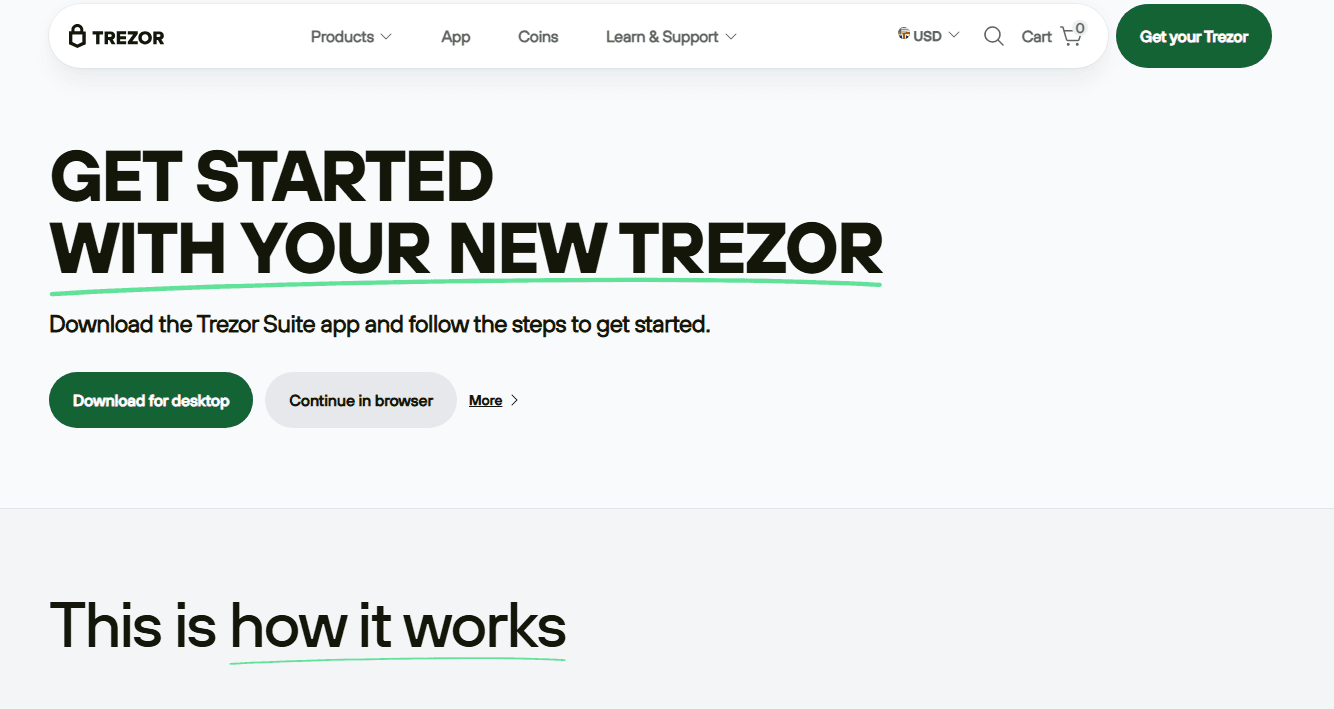
Trezor Login: The Complete Guide to Accessing Your Hardware Wallet Securely
Cryptocurrency security begins with controlling your private keys. While exchanges and software wallets store keys online, Trezor hardware wallets provide offline protection, ensuring that only you can access your funds. Logging in to a Trezor wallet is not like entering a username and password; it’s a process built around the device itself, combining PIN codes, optional passphrases, and secure interactions through Trezor Suite.
Understanding the Trezor login process is essential for both beginners and advanced users. This guide covers everything from setup and access to troubleshooting, passphrase usage, and best practices for keeping your digital assets safe.
1. What Trezor Login Really Means
Unlike typical online logins, Trezor login is device-based authentication. When you log in, you are not connecting to a server or cloud account. Instead, you are unlocking your hardware wallet to access your private keys safely. The login process involves:
Connecting your Trezor device to your computer or smartphone
Entering your PIN on the device through a randomized keypad
Using Trezor Suite to manage your wallet
Confirming transactions and settings physically on the device
Because private keys never leave your Trezor, login ensures that your funds remain safe even if your computer or phone is compromised.
2. What You Need to Log In to Trezor
Before starting, make sure you have:
Trezor hardware wallet: Either Trezor Model One or Trezor Model T.
Trezor Suite application: Official interface for managing your wallet.
PIN code: Created during initial setup to unlock your device.
USB cable or connection method: Required to link your device to your computer or mobile device.
Recovery seed (for emergencies only): Never used for login, only for wallet restoration.
Having these ready ensures a smooth login process.
3. Step-by-Step Guide to Logging In
Step 1: Connect Your Trezor Device
Plug the device into your computer or mobile device. The screen should power on automatically. If it doesn’t, try another USB port or cable. Ensure the connection is stable.
Step 2: Open Trezor Suite
Launch the official Trezor Suite application. Do not download it from third-party sources. Trezor Suite detects your device and prepares it for authentication.
Step 3: Enter Your PIN
Trezor uses a randomized PIN keypad. The numbers are displayed differently each time, making it impossible for malware to capture your PIN. Enter your code as prompted, referencing the device screen for accuracy. After successful entry, your device will unlock.
Step 4: Access Your Dashboard
Once authenticated, the Trezor Suite dashboard will load. From here, you can:
View your portfolio
Add or remove crypto accounts
Send and receive funds
Update firmware
Access hidden wallets using a passphrase
Congratulations! You are now securely logged in.
4. Passphrase-Enabled Login: Extra Security
Trezor allows an optional passphrase feature. This is a secret word or sentence that creates hidden wallets. Each passphrase corresponds to a different wallet, giving you advanced control over multiple accounts.
Benefits:
Adds a layer of security even if someone finds your recovery seed
Supports multiple hidden wallets for sensitive assets
Helps manage decoy accounts
Important:
If you forget a passphrase, there is no recovery method. Treat it like an additional secret key.
5. Desktop vs. Web Access
Desktop Suite
Stronger security due to offline operations
Direct control over updates and firmware
Ideal for regular users managing multiple assets
Web Suite
Convenient for temporary access or devices without installation
Slightly higher exposure risk due to browser vulnerabilities
Use only from trusted computers
For maximum security, the desktop version is recommended.
6. Common Trezor Login Problems and Solutions
Problem 1: Device Not Detected
Solution: Check the USB cable, try a different port, restart Trezor Suite, update the software.
Problem 2: Incorrect PIN
Solution: Enter carefully using the randomized keypad. Too many wrong attempts will reset the device. Use the recovery seed to restore funds if needed.
Problem 3: Repeated Disconnects
Solution: Ensure a stable USB connection, remove USB hubs, disable conflicting applications, or try another computer.
Problem 4: Firmware Update Required
Solution: Follow Trezor Suite instructions carefully. Do not unplug the device during updates.
Problem 5: Passphrase Login Errors
Solution: Verify spelling, capitalization, and spaces. A new passphrase creates a new wallet; double-check before entering.
7. Security Tips for Safe Login
Never enter your recovery seed during login.
Always verify transactions on your device screen.
Use a unique, strong PIN.
Keep recovery seeds offline and secure.
Download Trezor Suite only from the official site.
Keep firmware and software updated.
Avoid public or shared devices for login.
These practices prevent unauthorized access and phishing attacks.
8. Why Trezor Login Is Extremely Secure
Trezor login protects your assets because:
Private keys never leave the device
Randomized PIN prevents keyloggers
Physical confirmation is required for all operations
Optional passphrase adds hidden wallets
Open-source code allows public verification
No centralized account exists to hack
This security model makes Trezor one of the safest ways to access and manage cryptocurrency.
9. Difference Between Login and Wallet Recovery
Login:
Requires hardware device + PIN
Used for everyday access
Does not require recovery seed
Recovery:
Needed for lost, stolen, or reset devices
Requires recovery seed
Creates the same wallet on a new device
Trezor will never ask for your recovery seed during login or normal operations.
10. Best Practices for Beginners
Familiarize yourself with Trezor Suite before managing large balances
Enable passphrase only if you are confident in remembering it
Backup your recovery seed securely using fireproof materials
Test small transactions first before sending large amounts
Regularly check for firmware updates and install them
Following these practices reduces the risk of errors or loss.
11. Conclusion
Trezor login is not just a step to access your wallet—it’s a security process that ensures only you can interact with your crypto. By combining offline storage, PIN codes, passphrases, and physical confirmation, Trezor provides unmatched protection. Understanding the login process, following security guidelines, and troubleshooting issues when they arise allows you to manage digital assets confidently.
Whether you hold Bitcoin, Ethereum, or other cryptocurrencies, logging in with Trezor guarantees that your funds remain under your control, protected from hackers, malware, and online vulnerabilities. Take the time to understand the process fully—it’s the first step in mastering crypto security.