Trezor Login: A Fully Updated 1200-Word Guide for Secure Wallet Access
Cryptocurrency ownership comes with both opportunity and responsibility. While digital assets offer freedom from traditional financial systems, they also demand strong protection. This is where Trezor, a pioneer in hardware wallet technology, plays a crucial role. Instead of relying on internet-connected systems or centralized accounts, Trezor combines offline key storage with secure authentication. But to take full advantage of its security features, you must understand how the Trezor login process works—and how it differs from conventional online logins.
This guide explains everything you need to know about logging in to your Trezor wallet using Trezor Suite, how to prepare your device, how to troubleshoot issues, and how to keep your crypto safe from unauthorized access.
1. Why Trezor Login Is Different From Traditional Logins
When most people hear the word “login,” they think of entering a username and password on a website. Trezor does not use this method. There is no online account, no cloud storage, and no central server involved. Instead, Trezor uses a secure process based entirely on your hardware wallet and the PIN code you create during setup.
Your Trezor login is essentially the act of:
Connecting your hardware device
Entering your PIN
Authorizing access through Trezor Suite
Confirming important actions on the physical device
Because your private keys never leave the device, and because critical actions must be approved physically, Trezor drastically limits the potential for cyberattacks.
2. The Tools Required for a Trezor Login
To access your Trezor wallet, make sure you have the following items ready:
✔ Your Trezor Device
This may be:
Trezor Model One
Trezor Model T
Each operates slightly differently, but both use a similar login flow.
✔ Trezor Suite
This is the official software interface for managing your hardware wallet.
✔ Your PIN Code
Your secure PIN unlocks the device when you connect it.
✔ USB Cable
A stable connection is essential for transferring data securely between your Trezor and your computer.
✔ Recovery Seed (Not Used for Login)
The 12-, 18-, or 24-word recovery phrase is used only in emergencies—never during login.
Anyone who asks for your seed phrase is trying to steal your funds.
3. Step-by-Step: How to Log In to Trezor the Right Way
Let’s walk through the standard Trezor login process in a detailed, beginner-friendly way.
Step 1: Connect Your Trezor to Your Computer
Use the provided USB cable to connect your device to your computer.
Once connected, the Trezor will power on automatically.
If the screen doesn’t turn on, try another cable or USB port, as some ports may not supply power.
Step 2: Launch Trezor Suite
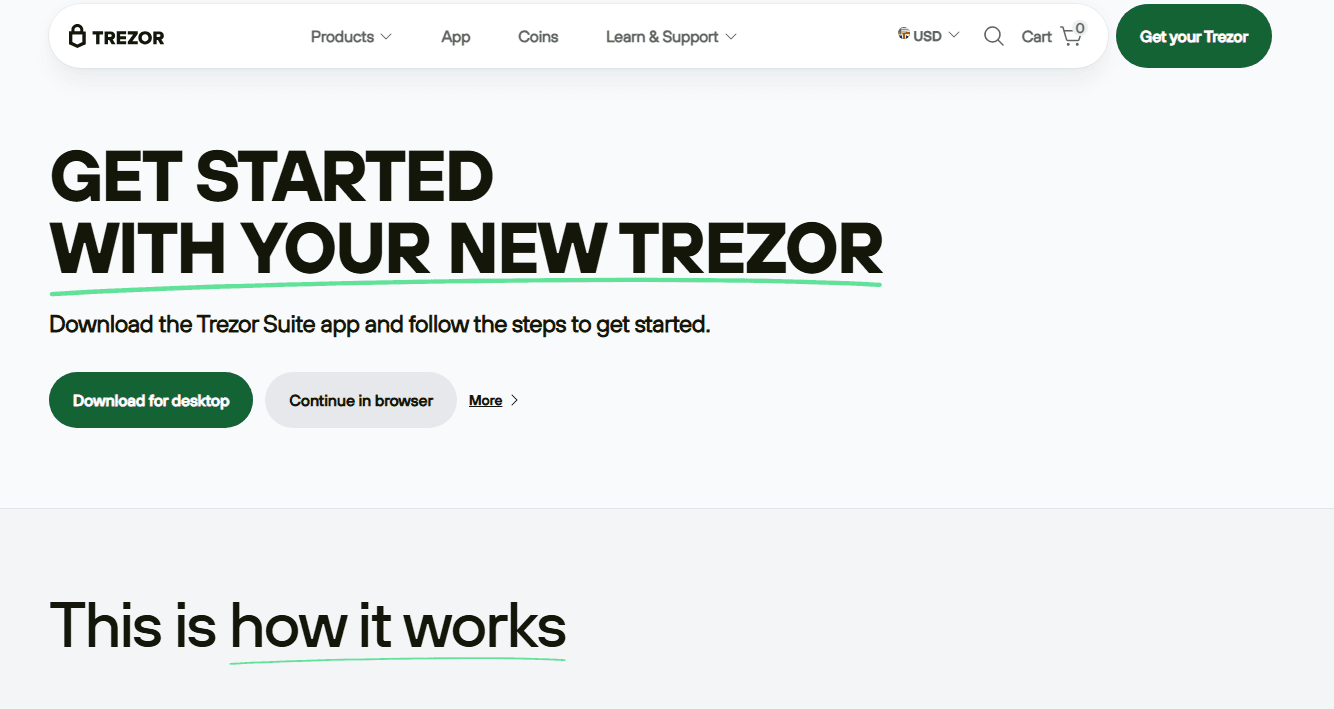
Open the Trezor Suite application on your computer. If you haven’t installed it yet, download it from the official Trezor website. Avoid third-party sources, as unofficial software can compromise your device’s security.
Trezor Suite will immediately attempt to detect your connected device.
Step 3: Enter Your PIN Code
Once the device is detected, Trezor Suite will prompt you to enter your PIN code.
Here’s where the Trezor system shines: the PIN entry uses a randomized keypad to prevent hackers from guessing your code based on keystrokes or screen taps.
You’ll see a grid on your computer screen with blank spaces, while your Trezor device displays the corresponding number positions. Match the positions instead of typing the numbers directly.
This method ensures the PIN cannot be captured by malware.
Step 4: Wait for the Device to Unlock
If the PIN is correct, your Trezor will unlock and allow the Trezor Suite dashboard to load.
If you enter the wrong PIN too many times, the device will wipe itself to protect your funds.
After unlocking, you will now have full access to your wallet features.
Step 5: Access Your Wallet Dashboard
Once logged in, Trezor Suite displays your dashboard, where you can:
Add or remove crypto accounts
View balances and transactions
Send and receive coins
Manage security features
Update firmware
Customize device settings
Activate hidden wallets with a passphrase
The Trezor login is now complete, and you can safely manage your cryptocurrency portfolio.
4. Trezor Login with Passphrase: A Second Layer of Security
Trezor also supports an optional security layer known as the passphrase.
A passphrase acts as:
An extra word
A secret sentence
A unique identifier that creates a new, hidden wallet
This means your Trezor can hold multiple wallets—some visible, others hidden.
Why use a passphrase?
Adds protection even if someone gets your recovery seed
Allows you to create decoy wallets
Creates an isolated wallet environment for sensitive assets
But remember:
If you forget your passphrase, Trezor cannot recover it.
Every different passphrase leads to a completely different wallet.
5. Trezor Login on Desktop vs. Browser Access
Trezor gives users two ways to log in and access their wallets:
✔ Trezor Suite Desktop
This is the recommended method because:
It provides the strongest protection against phishing
It works offline for certain functions
It includes enhanced security checks
It avoids browser vulnerabilities
✔ Trezor Suite Web
The browser version is helpful if:
You’re using a computer temporarily
You don’t want to install software
You’re switching between devices
While convenient, browser-based access is slightly less secure because browsers are more susceptible to malware and phishing scripts.
6. Common Trezor Login Problems and How to Fix Them
Even with a reliable device, you might occasionally run into issues.
Here are the most common login problems users face and their solutions.
Problem 1: Trezor Not Recognized By Trezor Suite
Possible causes include:
Faulty USB cable
Damaged USB port
Outdated software
Missing drivers
Solutions:
Try a different cable
Switch USB ports
Restart your computer
Update Trezor Suite
Disable browser extensions if using web access
Problem 2: Incorrect PIN or Forgotten PIN
If you enter the wrong PIN several times, your wallet will reset itself automatically.
Solution:
Use your recovery seed to restore your wallet on the same device or a new one.
You will create a new PIN during restoration.
Problem 3: Device Keeps Disconnecting During Login
This may be caused by unstable USB power or software conflicts.
Solutions:
Use a direct USB port instead of a hub
Replace the cable
Close unnecessary apps
Update operating system drivers
Problem 4: Firmware Update Required Before Login
Occasionally, Trezor Suite may require you to update your firmware before logging in.
Solutions:
Follow the on-screen instructions carefully
Do not unplug the device during the update
Ensure a stable power connection
Problem 5: Passphrase Errors
If using a passphrase-protected wallet:
Solutions:
Ensure perfect spelling and capitalization
Remember that space, letters, and symbols matter
Understand that a new passphrase creates a new wallet
7. Safety Tips for a Secure Trezor Login Experience
To keep your login process and wallet safe, follow these essential guidelines:
✔ Never enter your recovery seed during login
Your seed is for restoration only.
✔ Always download Trezor Suite from the official website
Never trust third-party sources or links.
✔ Verify every transaction on your device screen
Your device screen is the trusted source—not your computer.
✔ Use a strong and memorable PIN
Avoid predictable combinations.
✔ Keep your recovery seed offline
Store it in a secure location, ideally using a metal backup plate.
✔ Keep firmware and software updated
Regular updates patch security vulnerabilities.
✔ Avoid using public or shared computers for login
Shared machines are more vulnerable to malware or spyware.
8. Why Trezor Login Is one of the Most Secure Authentication Systems in Crypto
Unlike centralized exchanges or cloud wallets, Trezor does not rely on servers, databases, or online accounts. Its security comes from:
Offline private key storage
Physical device confirmation
Cryptographic PIN protection
Randomized keypad entry
Optional passphrase encryption
Open-source code transparency
No central server that can be hacked
This combination makes unauthorized access incredibly difficult, even for experienced hackers.
9. Final Thoughts
The Trezor login process is simple, secure, and designed with user protection at its core. By using a hardware wallet instead of relying on online systems, you dramatically reduce the risk of hacks, phishing, and unauthorized access. Understanding how the login process works—and how to troubleshoot potential issues—gives you complete control over your digital assets.
Whether you’re storing Bitcoin, Ethereum, stablecoins, or multiple altcoins, Trezor offers one of the strongest security infrastructures available. Once you become familiar with the login flow, managing your crypto becomes fast, safe, and effortless.